
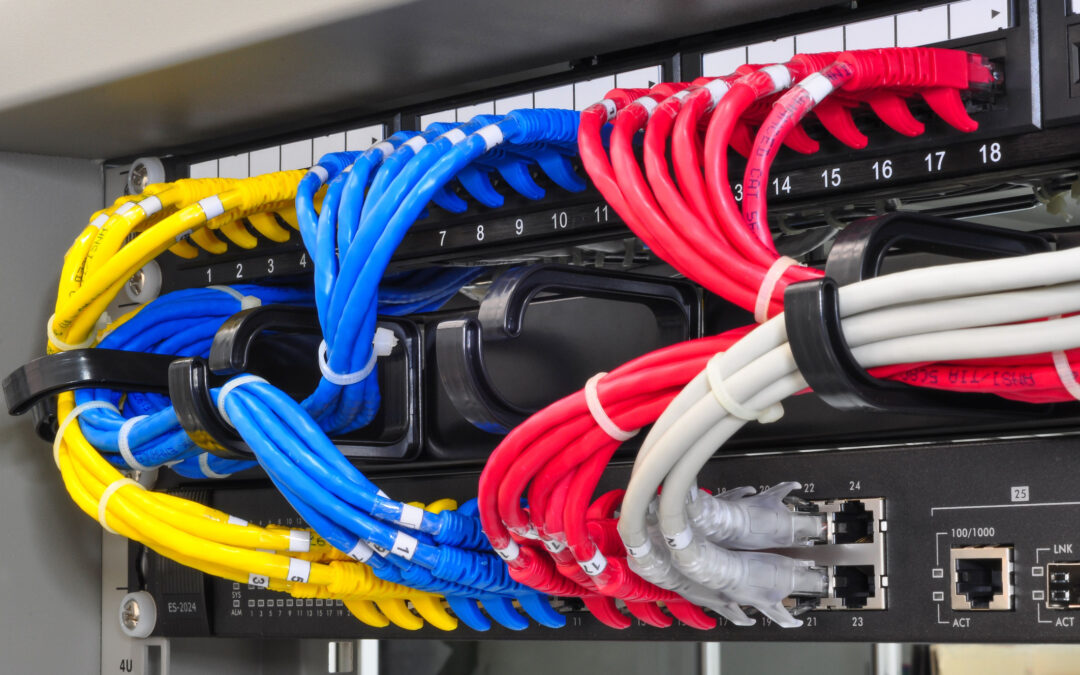
Structured cabling is the backbone of your business’s IT infrastructure—connecting your voice, data, video, and building management systems into one reliable network. But while a well-planned cabling system can support your operations for years, common mistakes during installation can lead to costly downtime, poor performance, and expensive rework.
At BCS Voice & Data, we’ve seen firsthand how avoidable cabling errors can cause major issues. Here are some of the most common structured cabling mistakes—and how to prevent them.
Poor Cable Management
The mistake: Letting cables tangle, bend sharply, or run loosely without proper support is a recipe for signal interference and future maintenance headaches.
Prevention tip: Always use cable trays, ties, and labeling systems to organize and separate cables properly. Keeping power and data lines apart helps reduce interference and makes troubleshooting much easier later on.
Ignoring Industry Standards
The mistake: Cutting corners by using substandard cabling or failing to follow TIA/EIA guidelines can reduce performance and void warranties.
Prevention tip: Work with certified professionals who understand and follow current cabling standards. Choosing the right cable type (Cat6, Cat6A, or fiber) for your needs ensures long-term reliability and future scalability.
Not Planning for Future Growth
The mistake: Installing just enough cabling to meet current needs may save money upfront—but it limits your ability to grow or adapt later.
Prevention tip: Always build with the future in mind. Include extra cable drops, consider higher-spec cables than currently required, and ensure your infrastructure can support increased bandwidth or additional devices down the line.
Running Cables Too Close to Electrical Lines
The mistake: Data cables laid alongside power cables can suffer from electromagnetic interference (EMI), leading to degraded signal quality.
Prevention tip: Maintain proper separation between power and data cabling according to best practices. Use shielded cables when separation isn’t possible to help reduce EMI.
Skipping Cable Testing
The mistake: Some installers skip or rush the final testing phase, leaving potential issues undiscovered until the network is in full use.
Prevention tip: Thoroughly test all cables after installation using professional-grade tools. Document the results to confirm that each line meets performance specifications.
Overlooking Environmental Factors
The mistake: Installing cabling in hot, wet, or high-interference environments without proper protection can lead to early failure.
Prevention tip: Use plenum-rated cables in air-handling spaces, weatherproof cables outdoors, and ensure proper ventilation in equipment rooms. Choose the right materials for the environment your network operates in.
Your structured cabling system should be an asset, not a liability. By avoiding these common mistakes and working with experienced IT professionals, you can ensure your network is fast, flexible, and built to last.
At BCS Voice & Data, we specialize in designing and installing structured cabling systems that are clean, compliant, and ready for the future. Whether you’re building a new office or upgrading your current infrastructure, we’re here to help you do it right the first time.
Ready to optimize your cabling system? Contact us today to get started.
